

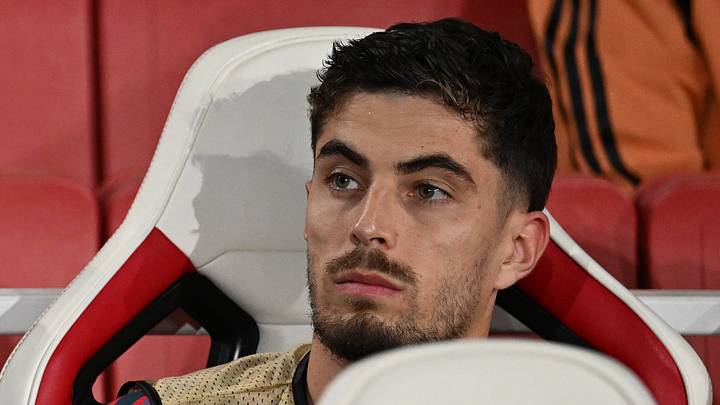
Arsenal's draw at Newcastle was a flat way to end the weekend. A one-nil lead at St James' Park should have been seen out, with Madueke levelling after going two-nil down. With Manchester City also making a comeback and Brighton dropping all three points to the Tigers, these results had slightly softened the blow. However, the performances of Kai Havertz and Martin Odegaard reaffirmed the lingering question. With Rice, Timber, Raya and Hincapie in talks over new deals, attention is turning to who comes next.
He began the season well, with goals in the Community Shield against City, the opener against Coventry and a strike against his old club Chelsea. Since then, the output has dried up. Between 21 September and 21 November, his only goal came at Anfield, and it was a big one, ending a 14-year wait for a win there. A huge goal nonetheless, but it also does not change the current climate. He has managed 1.83 shots per 90 in the Premier League, which places him in the 26th percentile. For a centre-forward, you expect significantly more.
Arteta clearly trusts him, with 10 starts in 11 league games. That reliance potentially says more about the manager's tactical preferences than about Havertz's output, and it has not delivered the goals you would expect from a lone striker. The offside count suggests similarly. Arsenal were flagged 35 times by 12 November, more than at any other point, and Havertz accounted for 15 of them (16 now). Arteta called the figure "far too many" after the win over Hull City.
Most offsides in the Premier League this season (at half-time in Arsenal vs Leeds):
— Opta Analyst (@OptaAnalyst) November 7, 2026
15 - Kai Havertz
14 -
13 -
12 -
11 -
10 -
9 -
8 - Dominic Calvert-Lewin
7 - Mohammed Kudus, Alexander Isak, Brennan Johnson, Bukayo Saka pic.twitter.com/tsAA7a50N3
The case for him rests on link-up play and his willingness to drop deep. That has some merit, and his assist at Newcastle was lovely. But the performances are polarising, and too often they have been hard to watch. After the Anfield goal, he offered little as a threat. Germany did not help his case either, as he did not contribute in the games against Serbia or the Netherlands.
The money matters too. At allegedly £300k a week, he is one of the best-paid players at the club, with less than 18 months left on his deal. Extending him would commit Arsenal to those wages for a player whose numbers are falling. Letting the contract run down, or selling in the summer while he still has value, makes more sense. Arsenal also have Gyokeres, so this is not a case of having no alternative up front. With the missing piece of a wide attacker still not filled, particularly after Arsenal’s summer pursuit of Vinicius Junior, Arsenal must continue their search for the correct pieces in their attacking puzzle.
What about Odegaard?
Odegaard is on a similar deal to Havertz, with around 18 months left, but his situation is different. Ahead of the Newcastle match, Mikel Arteta spoke publicly about wanting him to stay, calling him an "instrumental player" whose retention is "critical" to what Arsenal are building, and as captain, his status goes beyond his output.
Odegaard has also started the season relatively well and has been the more consistent of the two. That has also been reflected at his time with Norway, where he captains his country and was brilliant in the recent international break in a 3–2 comeback win away to Denmark, where he scored an 83rd-minute equaliser and pressed goalkeeper Hermansen to set up Erling Haaland's goal. But there are also games where he can fade out of the picture, and his decision-making can be questionable.
Against Newcastle, Odegaard was carrying the ball on a counterattack. Havertz was running centrally, Tzolis was on the right, and Calafiori had space on the left. Odegaard played it to Tzolis, which killed the attack by forcing Tzolis into a 1v1 situation with Lewis Hall. Calafiori was free, and a pass to him would have opened up an opportunity. An earlier pass to Tzolis would have also helped. This is a concern that has been raised before. Many have pointed to his "right-hand-side bias" and extreme left-footedness in his play, an analysis examined by Cannon Stats, which can leave teammates making runs or finding space elsewhere unused.
Selling him would change the dynamic of the dressing room significantly. Even so, Arsenal should maintain planning for his succession. With Max Dowman emerging and the future of Ethan Nwaneri still uncertain, could the two of them eventually take over Odegaard's role?
 Add us as a preferred source on Google