%20rotate(-8.06)%22%2F%3E%0A%20%20%3Cpolygon%20class%3D%22cls-1%22%20points%3D%22336.19%20136.81%20330.16%2094.25%20326.06%2071.19%20326.44%2071.13%20335.22%2093.54%20352.29%20134.52%20373.95%20131.46%20362.7%2052.01%20350.02%2053.8%20356.05%2096.36%20360.15%20119.42%20359.77%20119.48%20350.99%2097.08%20333.91%2056.09%20312.25%2059.15%20323.51%20138.6%20336.19%20136.81%22%2F%3E%0A%20%20%3Cpolygon%20class%3D%22cls-1%22%20points%3D%22402.91%2059.3%20412.36%20126.02%20427.17%20123.92%20417.72%2057.21%20431.59%2055.24%20429.79%2042.51%20387.23%2048.53%20389.04%2061.27%20402.91%2059.3%22%2F%3E%0A%20%20%3Cpolygon%20class%3D%22cls-1%22%20points%3D%22463.51%20118.77%20458.69%2084.71%20474.68%2082.44%20479.51%20116.5%20494.36%20114.4%20483.11%2034.95%20468.26%2037.06%20472.96%2070.25%20456.96%2072.52%20452.26%2039.32%20437.4%2041.43%20448.65%20120.88%20463.51%20118.77%22%2F%3E%0A%20%20%3Cpolygon%20class%3D%22cls-1%22%20points%3D%22540.5%20107.87%20538.77%2095.68%20518.91%2098.49%20515.77%2076.29%20535.63%2073.47%20533.93%2061.5%20514.07%2064.32%20511.11%2043.42%20530.98%2040.61%20529.25%2028.42%20494.53%2033.34%20505.78%20112.78%20540.5%20107.87%22%2F%3E%0A%20%20%3Cpolygon%20class%3D%22cls-1%22%20points%3D%22299.03%20155.17%20301.29%20171.58%20542.78%20138.39%20540.5%20121.97%20299.03%20155.17%22%2F%3E%0A%3C%2Fsvg%3E)

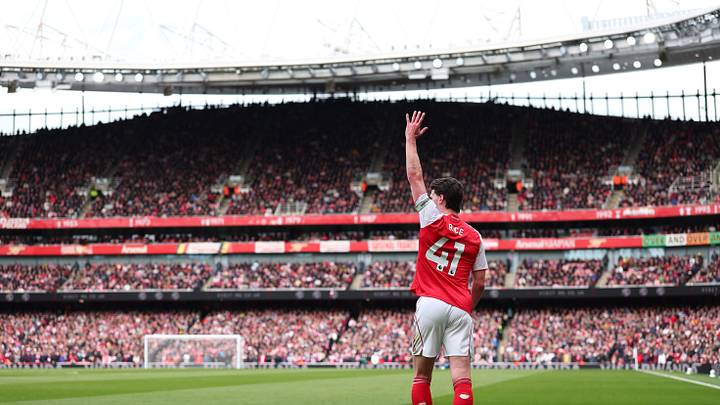
Arsenal have lost a significant part of their attacking edge. Last season opponents mocked the strength of the team calling them “Set Piece FC” but five games into the new season and fans should be worried that the team is struggling on dead ball situations, in both attack and defence. Concerningly, the underlying data shows a serious regression.
It is only five games into the season but the side have yet to score from a set piece and Arsenal are generating fewer set-play attempts meaning that the side have lost one of their biggest advantages over the rest of the league.
An Important Source Of Goals Has Dried Up
Set pieces are one of the strongest areas that a team can develop strength. They are one of the few areas of control. In many ways they are a great equaliser. For Arsenal it gave a title chasing team another way to win. It offered frustration for opponents as the Gunners were difficult to defend against and the attack was harder to contain.
The opening five games of the title winning season illustrates how substantial set pieces can be. 5 of the 10 goals came from set pieces. Arsenal also generated a league-leading 3.48 set-play xG, accounting for approximately 47% of their total expected goals in these opening games.
This time, Arsenal have scored eight goals without a single set-piece goal. Set-play xG accounts for approximately 21% of their total, less than half its previous share.
Fewer Chances, Lower Quality
The decline extends beyond finishing. Arsenal’s total set play attempts have fallen by 34.6%, while their set-play xG has dropped by 48%.
Because xG has fallen faster than attempts, the average quality of those shooting opportunities has also decreased. Arsenal generated approximately 0.13 xG per set-play attempt last season, compared with 0.11 this season, which is a reduction of around 20%.
That gives Arsenal two problems to address: producing more attempts and creating better opportunities from them.
What is even more worrying is that whilst Arsenal have regressed, the rest of the league has caught up or even overtaken the team. Average set play xG per team has edged up from 1.72 to 1.79, while Arsenal’s total has nearly halved. Their fall from first to ninth for set piece xG therefore reflects a substantial.
A Concern At Both Ends
There is a defensive warning too. The team having seemingly lost dominance in defending dead ball situations too. This season set play attempts conceded have more than doubled, from 7 to 15 compared to the same period in the 2025/26 campaign.
That increase sits within a broader defensive regression. Total attempts conceded have risen from 44 to 53, expected goals conceded have increased from 3.28 to 4.04, and actual goals conceded have doubled from two to four. Also, opponents have been able to create seven big chances compared with just two.
Set plays account for eight of the nine additional attempts Arsenal have conceded. That makes them a particularly important area to examine when assessing the increase in opposition shooting opportunities.
There are still reasons to keep the deterioration in perspective. Arsenal have allowed fewer attempts inside the box, down from 28 to 26, and have retained three clean sheets. Their xG conceded also remains the lowest in the league. The defensive foundation is strong, even if several measures have moved in the wrong direction.
The concern is therefore a weakening advantage at both ends.
No Time To Panic
There is good reason to believe Arsenal can recover their set-piece edge. Five unproductive matches should be weighed against a much longer record of success: Arsenal scored 16 Premier League goals from corners in 2023/24, followed by a record 19 in the 2025/26 title winning campaign. This is an established strength, even if the opening weeks have fallen below that standard.
Arteta has also faced questions about a drought before. Speaking in March 2025, he said: “Scoring from set-pieces is never a flat line that you are going to maintain”. Those words concerned an earlier unproductive spell, but offer useful perspective now. He recognises that opponents adapt and that delivery, movement and execution require continued attention.
Recruitment offers another reason for optimism. Tzolis created 52 chances from set pieces in the Belgian league last season, giving Arsenal an additional delivery option with a substantial record behind him.
The sensible conclusion is that Arsenal have the experience and personnel to respond. Their longer term record gives supporters grounds to view this as a potentially temporary dip, rather than assume a defining strength has disappeared.
 Add us as a preferred source on Google